
Observe the Thar Desert after dark
Stargazing in Jaisalmer
Step away from city lights for a guided desert night-sky experience featuring telescope handling, constellation orientation, moon observation and patient viewing under the open skies of Jaisalmer.
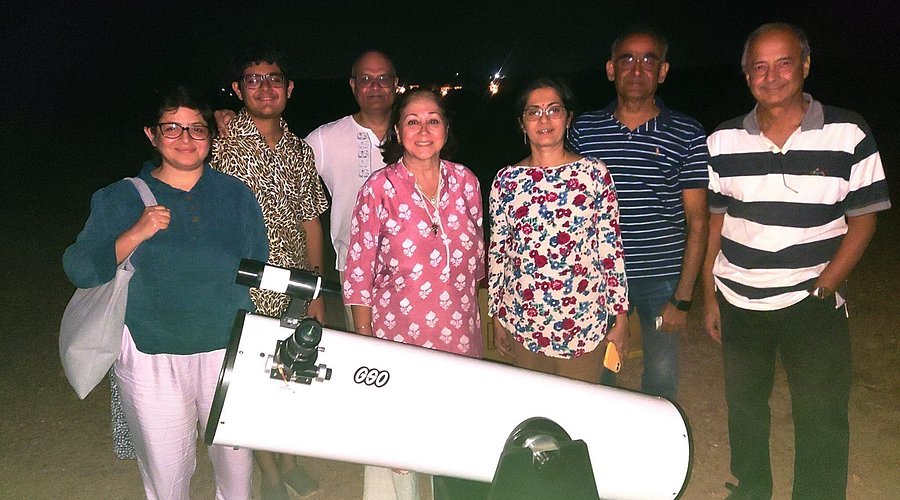
Beyond the usual sunset safari
A Genuine Desert Night-Sky Experience
Stargazing in Jaisalmer begins with something simple: darkness, distance and time. After the activity of the city and dunes settles, the desert can feel wider and quieter. A guided session helps guests stop treating the sky as a background and begin observing it as a changing landscape.
The experience is not a guaranteed checklist of planets or deep-sky objects. What can be viewed depends on the date, time, clouds, dust, atmospheric visibility, moon phase, season, equipment and chosen location. On suitable nights, a session may introduce bright planets, lunar features, prominent stars, seasonal constellations and basic celestial navigation. The guide adapts the observation plan to what is realistically visible.
This page is designed for travellers searching for a Jaisalmer stargazing tour, a private night activity, an educational family experience or an atmospheric addition to a desert-camp stay. The program can be arranged as a focused telescope session or combined with safari, dinner, overnight accommodation and breakfast.
How the evening unfolds
Your Stargazing Experience, Step by Step
A relaxed structure gives eyes time to adjust and allows the guide to select targets based on the real sky.
Arrival and Dark Adaptation
Reach the selected observation area and allow your eyes to adjust. Bright phone screens and white flashlights are reduced so faint stars become easier to notice.
Sky Orientation
Identify directions, the horizon and a few anchor stars or constellations. Learn how the visible sky changes with time, date and viewing position.
Telescope Introduction
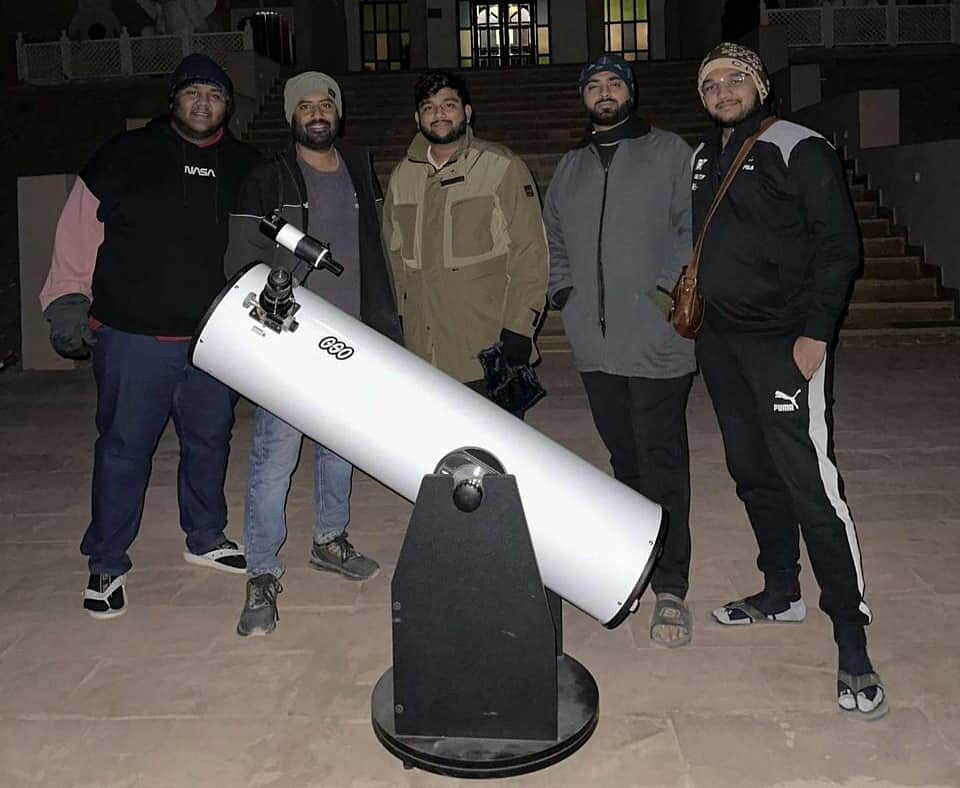
When a telescope is part of the confirmed program, the guide explains basic handling, focusing and how to look comfortably through the eyepiece.
Guided Observation
View suitable celestial targets selected for that night. These may include the Moon, bright planets, star groups or other objects when conditions permit.
Stories and Navigation
Discuss seasonal constellations, traditional ways of reading the sky and simple techniques used to understand direction after dark.
Photography Guidance
Guests interested in night photography can receive basic composition and exposure guidance. Results depend on the camera, lens, tripod and sky conditions.
Possible observation themes
What You May Explore During the Session
The program is built around what is visible—not around exaggerated promises.
The Moon and Its Surface
When the Moon is visible, a telescope may reveal shadowed craters, bright highlands and darker plains. Different phases highlight different surface relief.
Bright Planets
Depending on their position, planets such as Jupiter, Saturn, Venus or Mars may be observable. Planet visibility changes throughout the year.
Seasonal Constellations
Learn to recognise prominent patterns and understand why the constellations visible in winter are not identical to those seen in summer.
Stars and Star Colours
Compare bright stars, notice differences in colour and discuss how distance, temperature and atmospheric effects influence what we see.
Clusters and Deep-Sky Targets
Selected star clusters, nebulae or galaxies may be attempted when the equipment, darkness, season, moonlight and atmospheric clarity support observation.
Celestial Navigation
Explore basic direction-finding ideas using stars and learn why the sky appears to move during the night as Earth rotates.
The setting matters
Why the Desert Changes the Way You See the Sky
A suitable desert location can reduce nearby glare and open a broad horizon, but darkness alone is not enough. Clear air, low dust, limited clouds and thoughtful lighting around the group all affect the quality of a desert stargazing experience.
Realistic planning
Best Time for Stargazing in Jaisalmer
There is no single perfect night for every kind of observation. A darker moon phase can improve contrast for faint stars and deep-sky objects, while a brighter Moon is useful when the goal is to study lunar craters and surface features. Planet visibility follows its own schedule and must be checked for the specific date.
October to March is popular because desert evenings are cooler and often fit naturally into Jaisalmer travel itineraries. Winter nights can become cold, so guests should carry layers. Warmer months may offer different sky targets but require comfort planning. Dust, wind and seasonal clouds can affect any period.
For the best chance of a useful session, share your date before booking. The team can discuss moonlight, expected timing and practical conditions without guaranteeing a particular object. Guests interested in astrophotography should also mention their camera, lens and tripod so the program is not mistaken for a fully equipped photography workshop.
Come prepared
Comfort, Equipment and Responsible Viewing
What to Bring
- Warm layers during cool desert evenings
- Closed, comfortable footwear
- Personal medicines and drinking water
- A phone with brightness reduced
- Camera, tripod and charged batteries if photographing
- Patience—eyes need time to adapt to darkness
What to Expect
- Targets selected according to actual visibility
- Shared or private format as confirmed
- Telescope availability only when written in the package
- Timing affected by moonrise, sunset and season
- Possible changes because of cloud, dust or wind
- No touching optical equipment without guidance
Responsible night sky observation in Jaisalmer also means protecting darkness for everyone. Avoid flash photography near the telescope, do not shine headlights directly towards the viewing area and follow the guide’s instructions. Children are welcome when supervised, but the session should remain calm so all guests can observe comfortably.
Night-sky gallery
Stargazing Moments in the Jaisalmer Desert
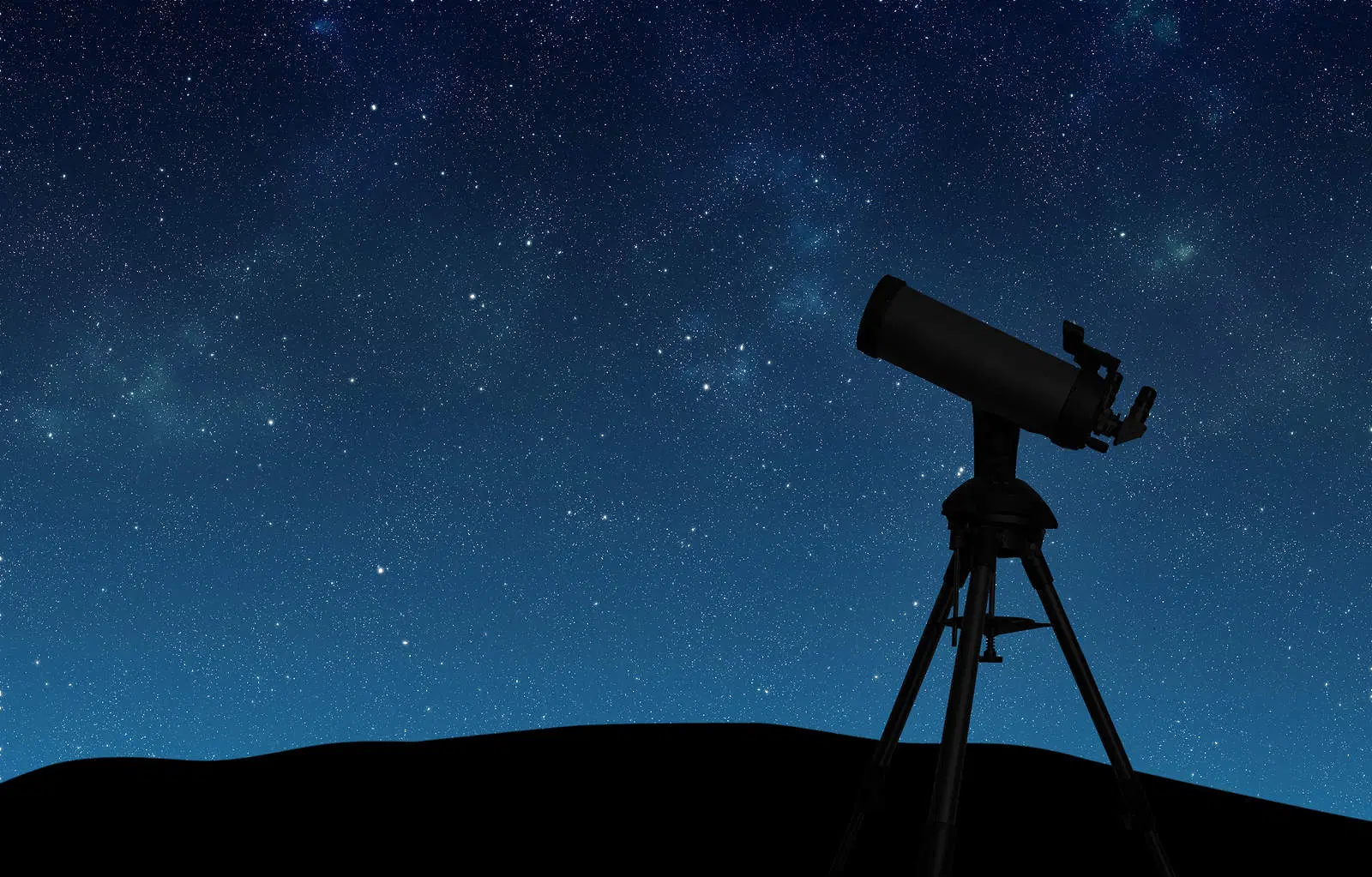
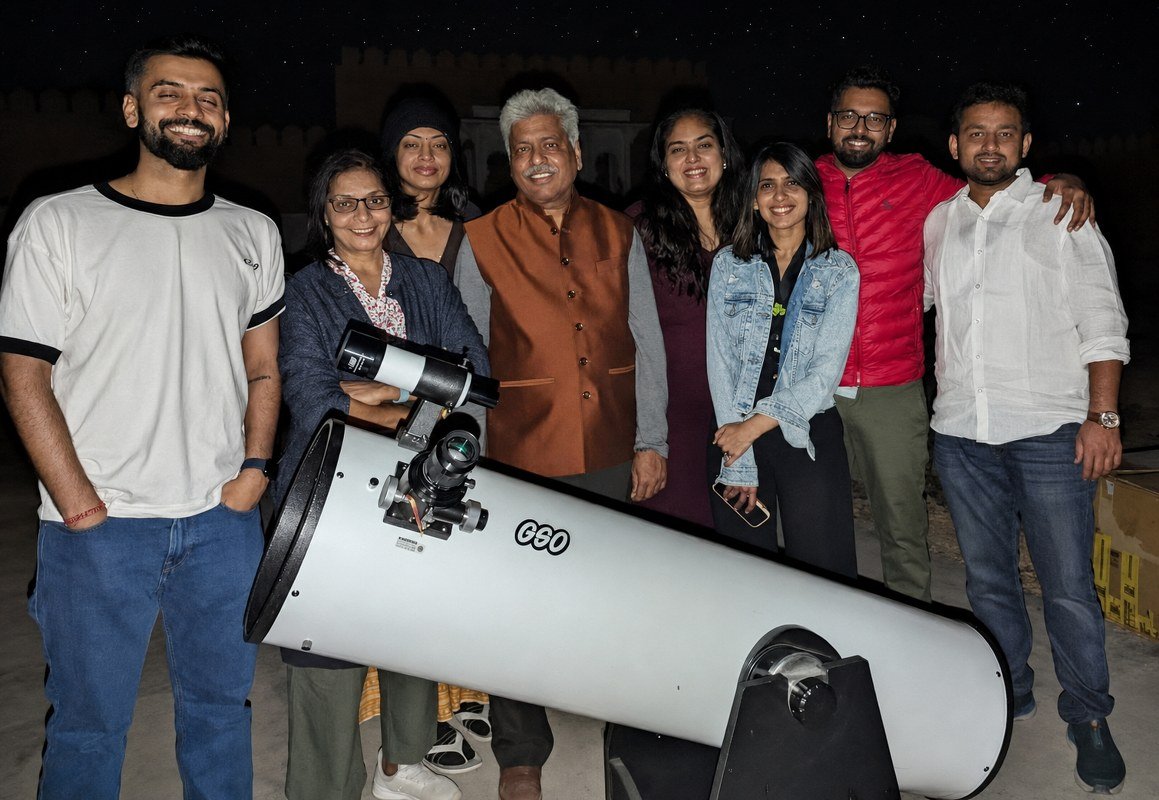
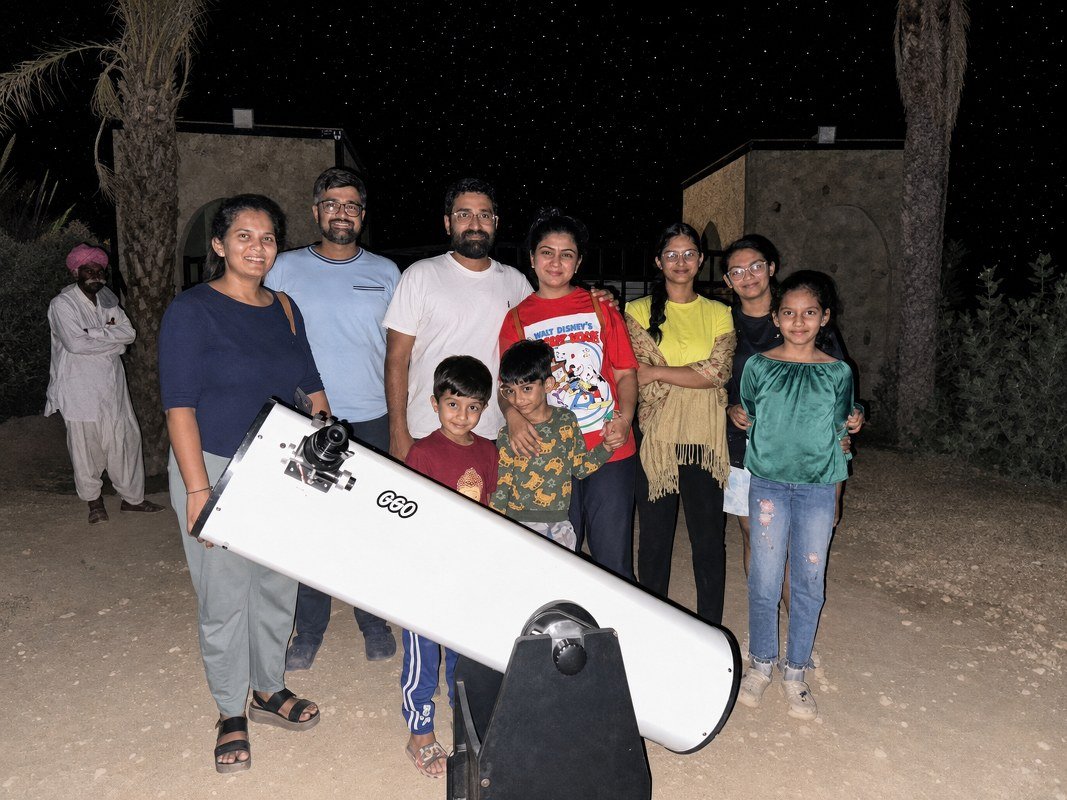
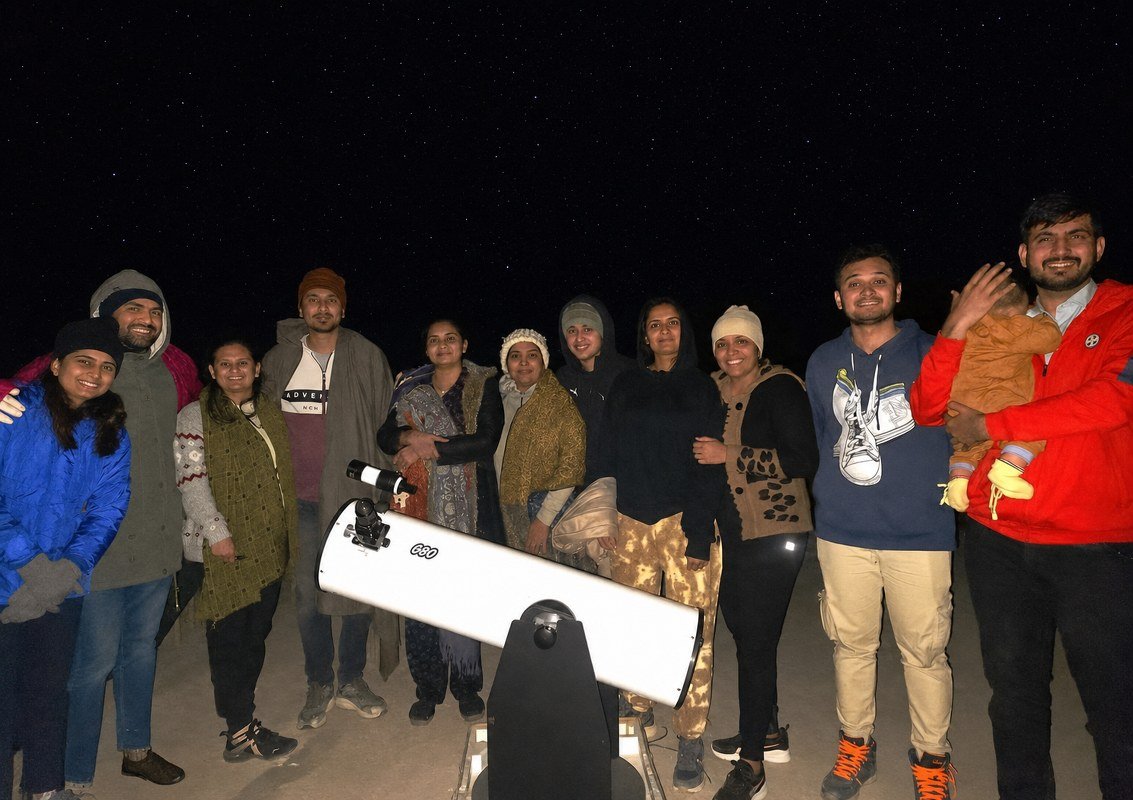
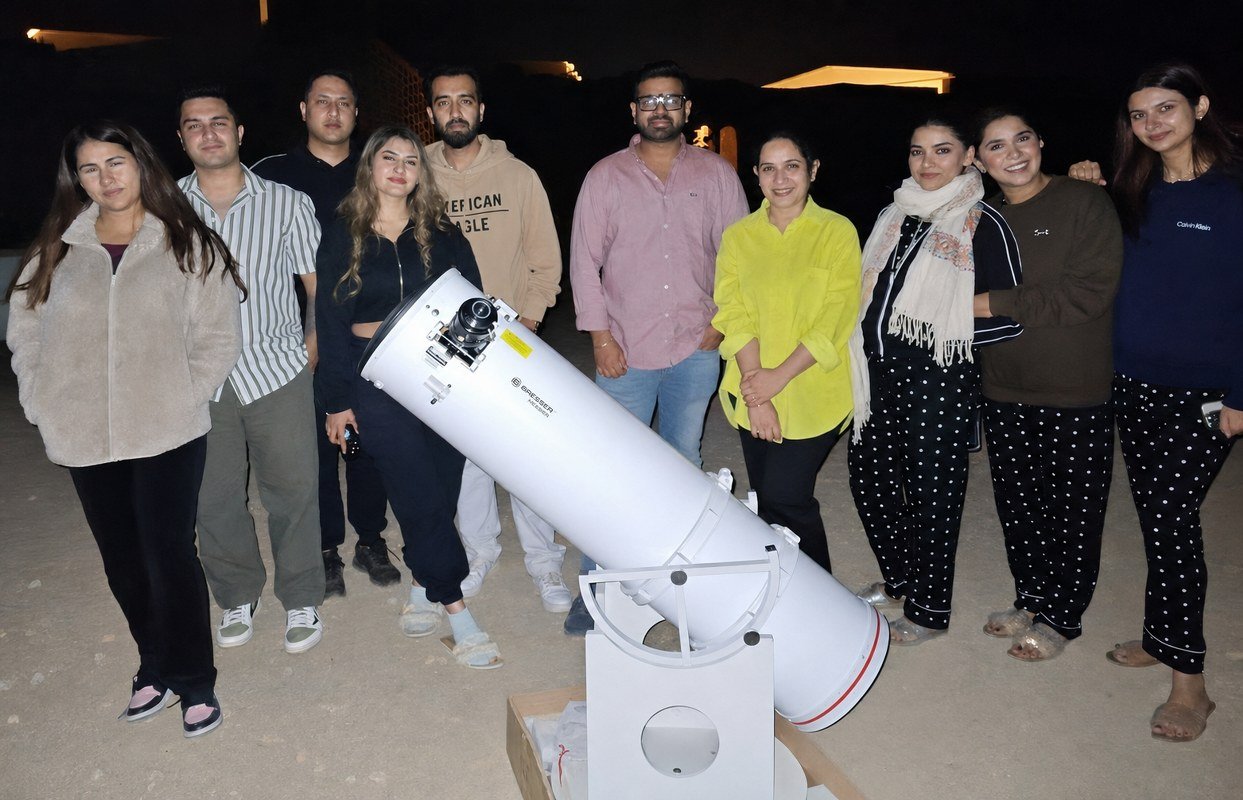
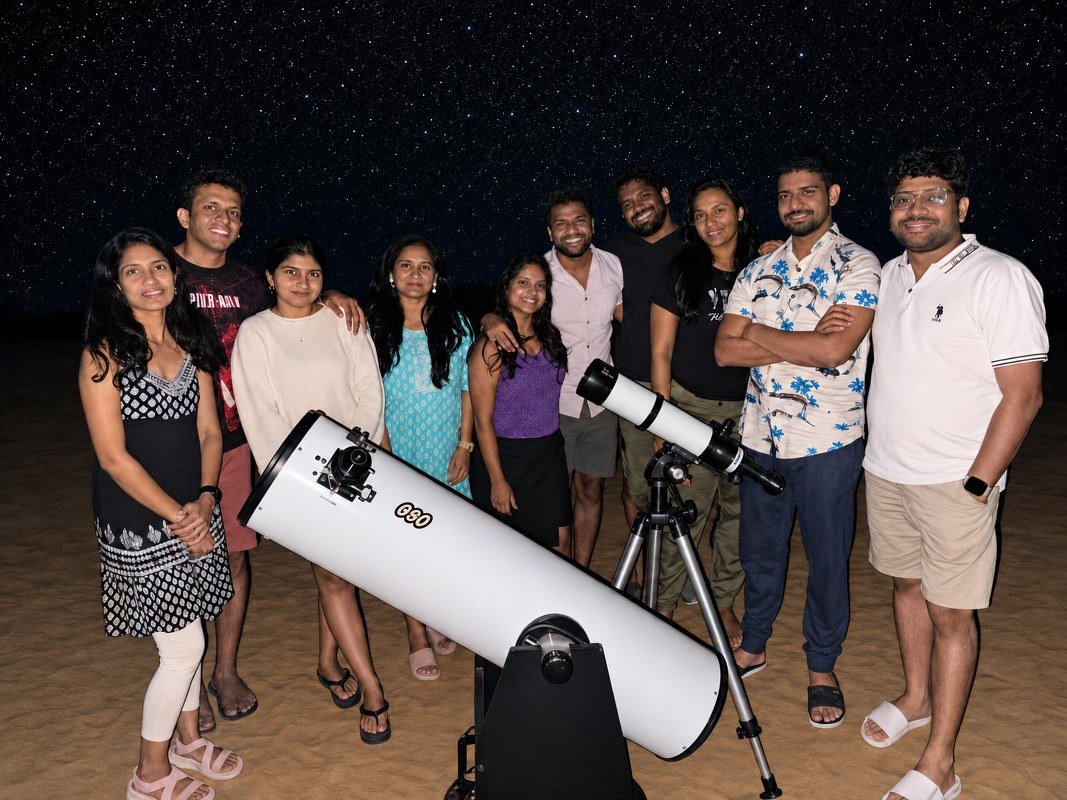
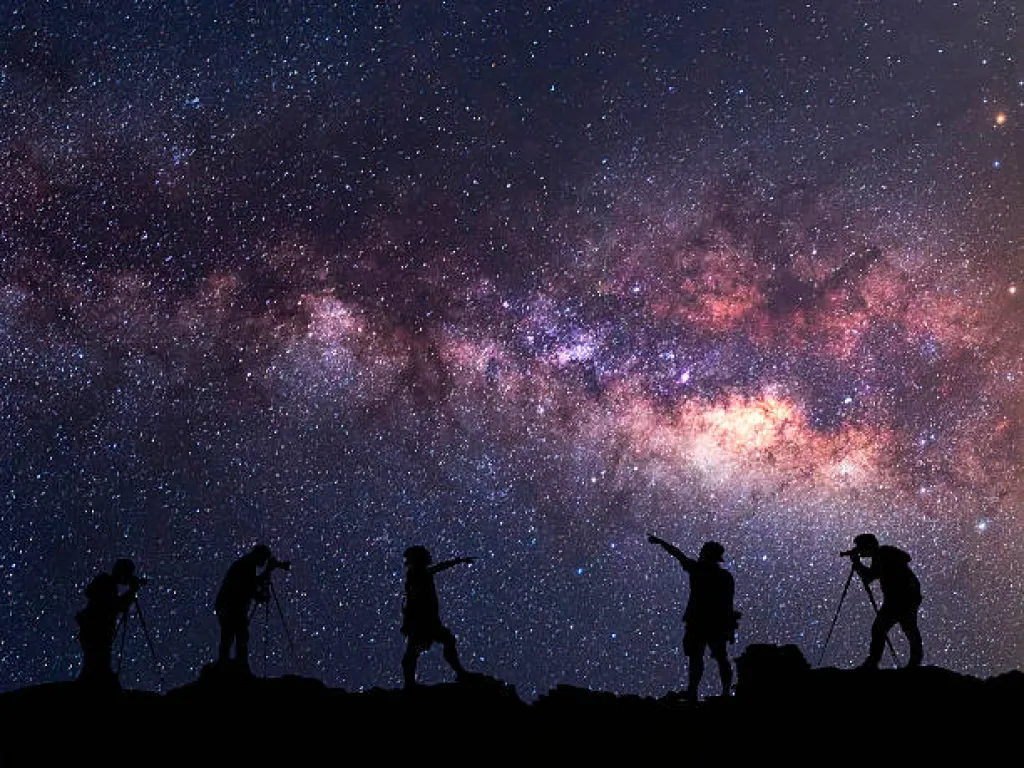
The gallery shows the atmosphere, equipment and range of settings that can form part of a pre-booked experience.
Build your evening
Combine Stargazing with a Jaisalmer Experience
The activity becomes easier to plan when it is linked with transport, meals or an overnight stay.
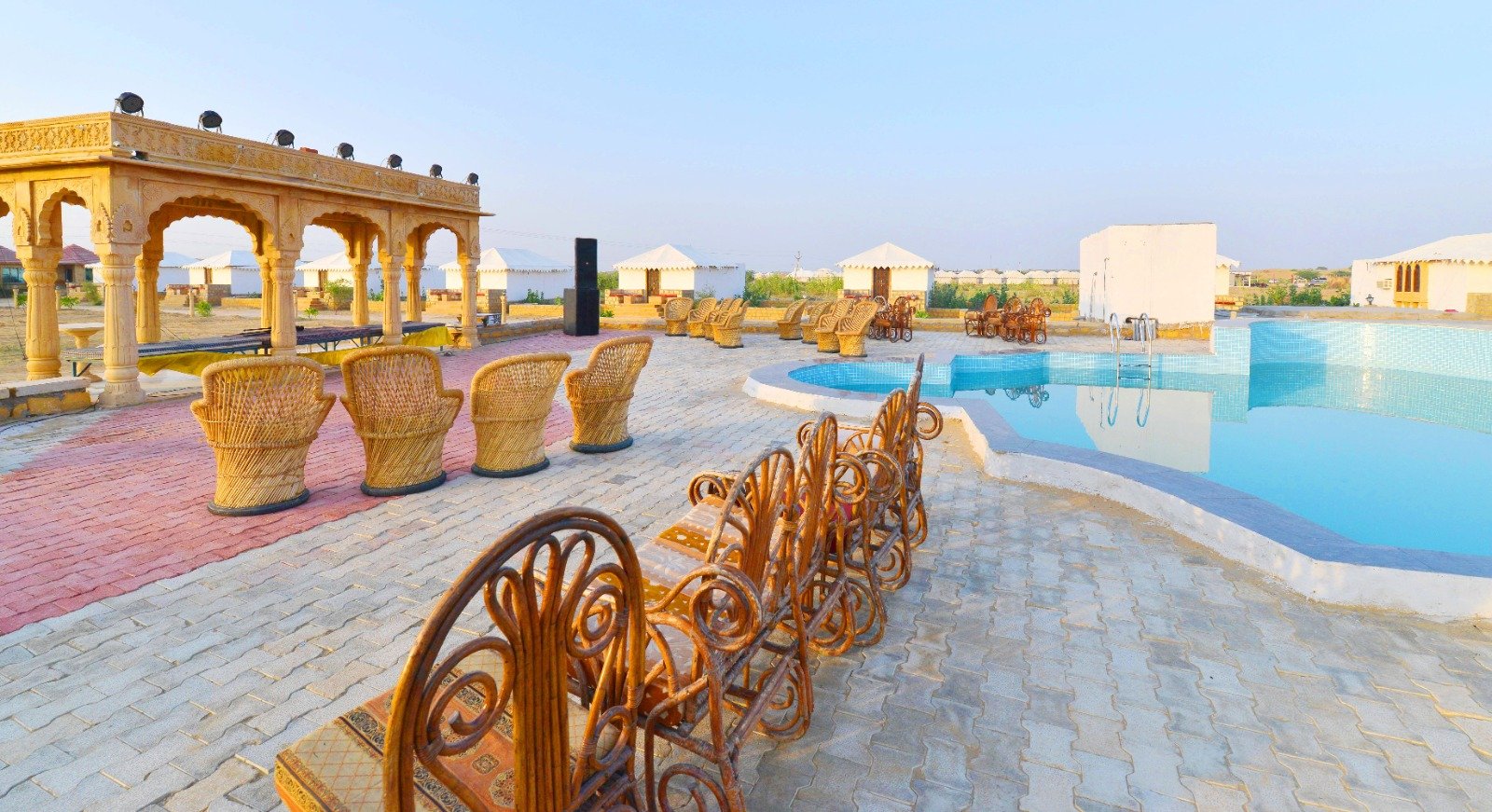
Safari and Stargazing
Begin with a sunset camel or jeep safari, allow time for dinner and continue to a suitable night-sky location when conditions permit.
Explore Desert Safari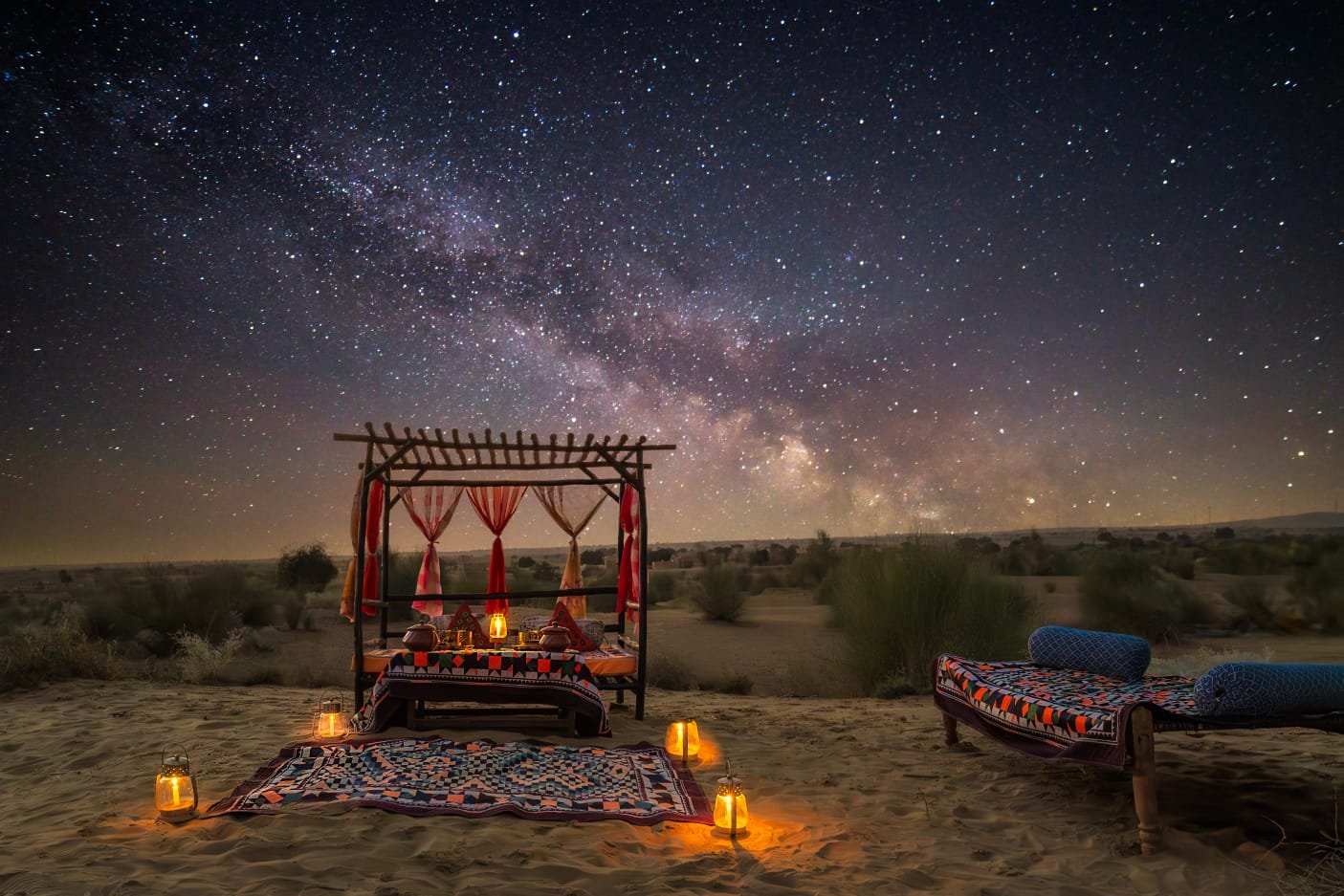
Dinner and Night Sky
Add a private or group dinner-on-dunes arrangement before a calm observation session away from unnecessary lighting.
Explore Dinner on Dunes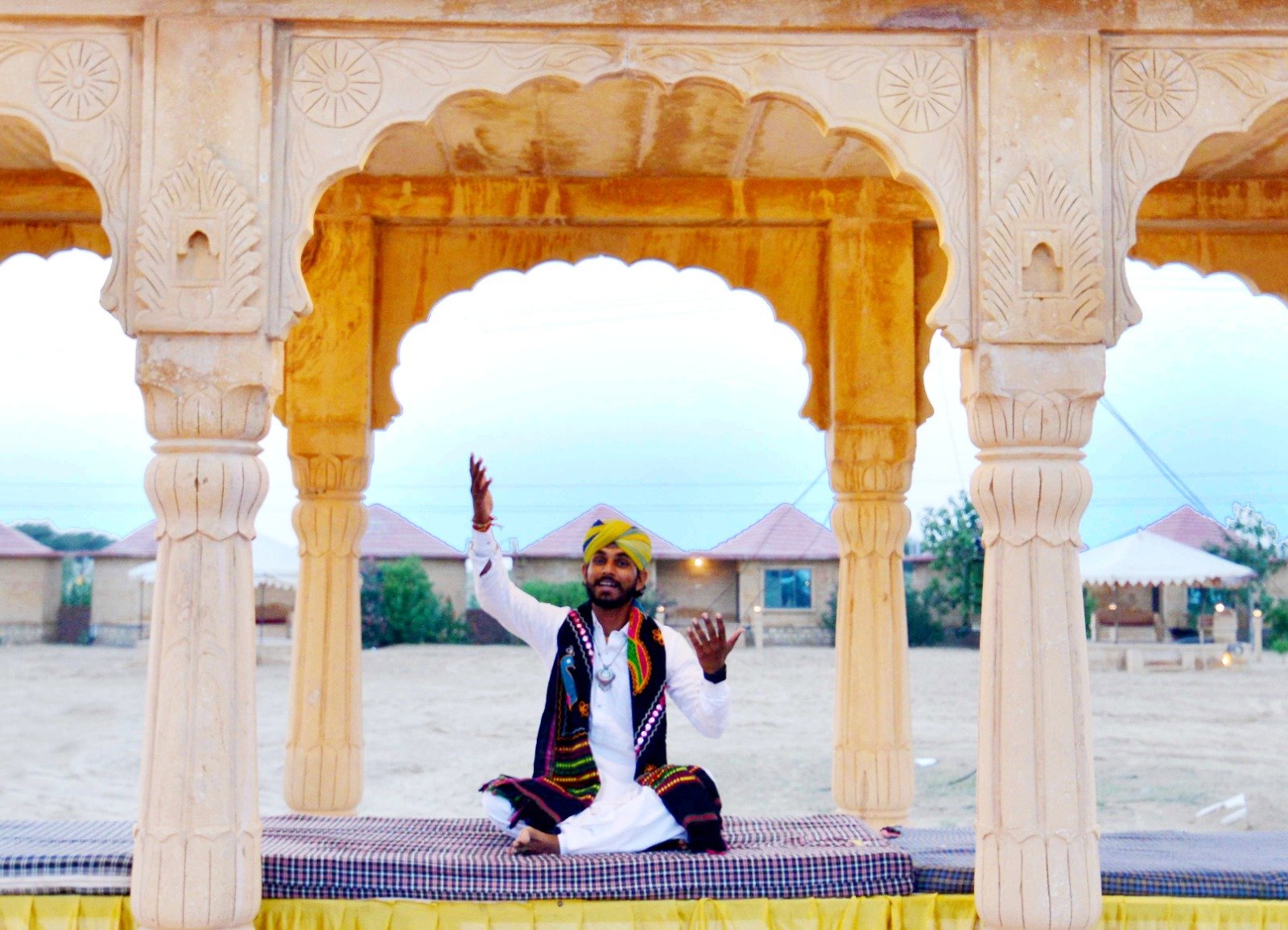
Camp Stay and Stargazing
Combine the session with cultural entertainment, dinner, overnight desert accommodation and breakfast the next morning.
Explore One-Night CampShrinath Adventures can assist with customised transport, private-group planning and wider Rajasthan itineraries. Visit Shrinath Adventures, or review the location and current public information through the Shrinath Desert Camp Google listing.
SEO and related searches
People Also Search for These Night Experiences
These closely related phrases are included naturally to cover the questions travellers use when planning a desert night.
Continue exploring
Related Jaisalmer Pages
Before you book
Frequently Asked Questions
What is included in a stargazing experience in Jaisalmer?
The confirmed program may include dark-sky orientation, constellation guidance, telescope handling and observation of suitable celestial targets. Transport, meals, safari and accommodation depend on the package selected.
Can we definitely see Jupiter, Saturn or Mars?
No planet can be guaranteed for every date. Visibility depends on the planet’s position, observation time, horizon, weather and equipment. The guide selects realistic targets for the actual night.
Is a telescope included?
A telescope is included only when stated in the confirmed package. Ask about equipment, shared or private use and session format before booking.
What is the best moon phase for stargazing?
A darker moon phase often helps with faint stars and deep-sky viewing, while a brighter Moon is suitable for observing lunar features. The better choice depends on your goal.
Can children join the experience?
Yes, supervised children can enjoy an educational session. Parents should prepare them for darkness, quiet observation, cool temperatures and careful behaviour near equipment.
Can stargazing be combined with a desert camp stay?
Yes. It can be combined with safari, cultural entertainment, dinner, overnight accommodation and breakfast, subject to timing and availability.
Can we take photographs through the telescope?
Possibilities depend on the telescope, adapter, phone or camera and the selected target. General photography guidance does not guarantee professional astrophotography results.
What happens if the sky is cloudy or dusty?
The session may be shortened, adjusted, rescheduled or handled according to the confirmed booking terms. Discuss the weather policy before payment.
What should we wear at night in the desert?
Wear comfortable closed footwear and carry suitable layers, especially in winter. Desert temperatures can fall considerably after sunset.
How do we book a private stargazing session?
Send your date, guest count, pickup point and preferred package through the WhatsApp form. The team will confirm timing, location, equipment and availability.
Pre-booking required
Plan Stargazing in Jaisalmer
Share your date, group size and preferred combination. The team will reply with available timing, inclusions and a realistic viewing plan.

